Electrical Safety Protection During the Rainy Season: Practical Measures to Prevent Electric Leakage and Short Circuits at Construction Sites and Industrial Facilities
I. Introduction of Electrical Safety Issues During the Rainy Season
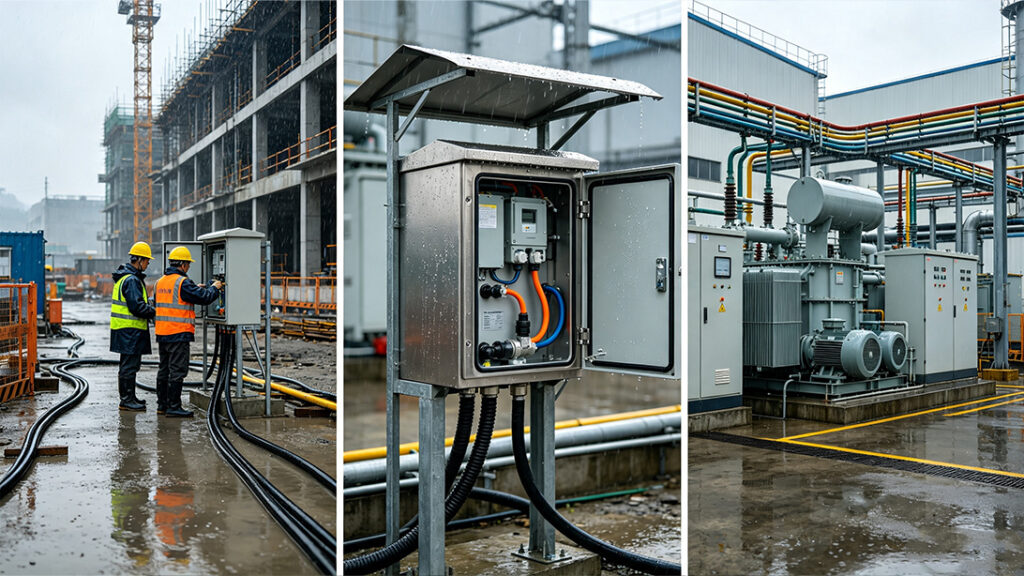
Every year when the rainy season arrives, construction sites and factories begin facing serious challenges. Rainwater brings not only problems with construction schedules but also potential hazards to electrical equipment safety.
Everyone understands that water conducts electricity. However, in actual operations, problems such as rainwater entering distribution boxes, cables being submerged in water, and grounding wires becoming rusty or loose still occur frequently.
Electrical leakage and short circuits are not the same thing, but they often occur together. When rainwater enters a switchgear room, the equipment may trip immediately once power is supplied. If cables remain soaked for a long time, insulation aging accelerates, leakage current gradually increases, and if protection devices fail to respond sensitively, short circuits may eventually occur.
In severe cases, equipment may burn out, cause fires, or even result in electric shock accidents. These incidents are rarely caused by a single problem. More often, multiple safety weaknesses accumulate and break out together during rainy weather.
The conditions at construction sites and factories are also different.
Construction sites usually involve temporary power systems. Cables are frequently moved, and protection conditions are relatively poor. A cable that was properly buried today may be exposed and soaked in water after excavation work tomorrow.
Factory equipment is generally fixed, but it operates for long periods. Different risk points exist in:
- Power distribution rooms;
- Humid workshops;
- Outdoor equipment areas.
However, regardless of the environment, the basic requirements for electrical safety during the rainy season remain the same:
- Prevent electrical leakage;
- Prevent short circuits;
- Prevent lightning damage.
The following sections will explain practical solutions step by step, including:
- How to protect cables;
- How to waterproof distribution boxes;
- How to inspect grounding systems and leakage protection devices;
- How to prepare emergency response plans.
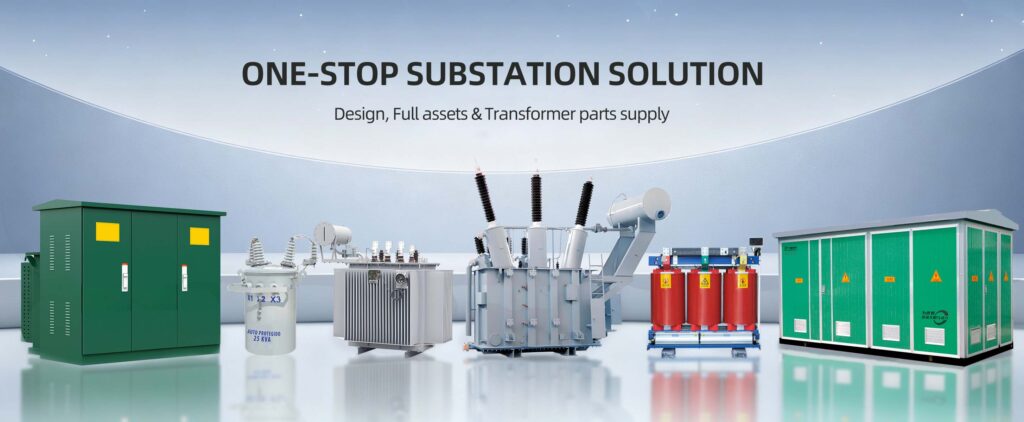
Zisheng Electric has been engaged in power equipment manufacturing for many years. Its products include:
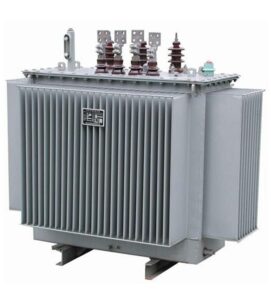
- Oil-immersed transformers;
- Dry-type transformers;
- Amorphous alloy transformers;
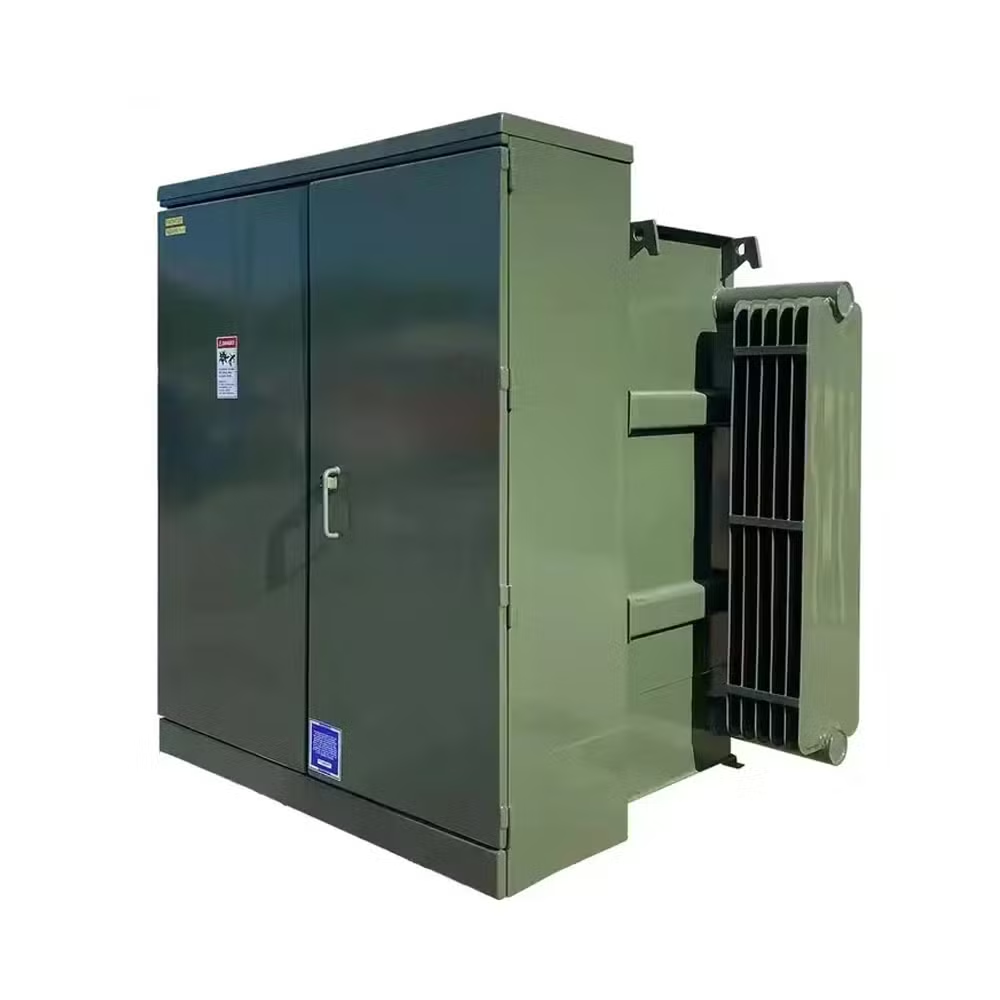
- Outdoor waterproof and dustproof distribution boxes.
Products are supplied according to international standards such as IEC 60076 and GOST, with main markets covering:
- The Middle East;
- South America;
- Africa;
- Russia.
These regions often face harsh conditions such as high temperatures, humidity, and heavy dust exposure. Through years of experience, Zisheng Electric has accumulated extensive expertise in:
- Moisture resistance;
- Corrosion protection;
- High-temperature resistance.
II. Protection Standards and Basic Principles
2.1 Protection Rating (IP Code)
First, let us discuss a basic concept: IP protection rating.
When purchasing electrical equipment, people often see markings such as IP54 or IP65. These are internationally recognized protection classifications.
The first digit indicates protection against solid objects, while the second digit indicates protection against water.
The higher the number, the stronger the protection capability.
| Application Environment | Recommended IP Rating | Protection Capability |
|---|---|---|
| Dry indoor environment | IP20 or above | Prevents contact with fingers and solid objects |
| Humid indoor environment | IP44 or above | Protection against splashing water |
| Normal outdoor rainfall | IP54 or above | Protection against water spray and dust |
| Outdoor heavy rainfall | IP55 / IP65 | Protection against water jets and dust |
| Possible water immersion environment | IP67 / IP68 | Protection against temporary or long-term immersion |
For outdoor distribution boxes used on construction sites, the protection level generally should not be lower than IP54.
If the site environment is harsh, or equipment may be directly exposed to high-pressure water cleaning, IP65 or higher should be selected.
During equipment selection, price should not be the only consideration. Insufficient protection levels can create long-term safety risks.
2.2 Basic Principles of Electrical Safety
Rainy-season electrical safety protection follows several fundamental principles that apply to all preventive measures.
Waterproof Isolation
The basic idea is to keep electrical equipment separated from water sources.
Examples include:
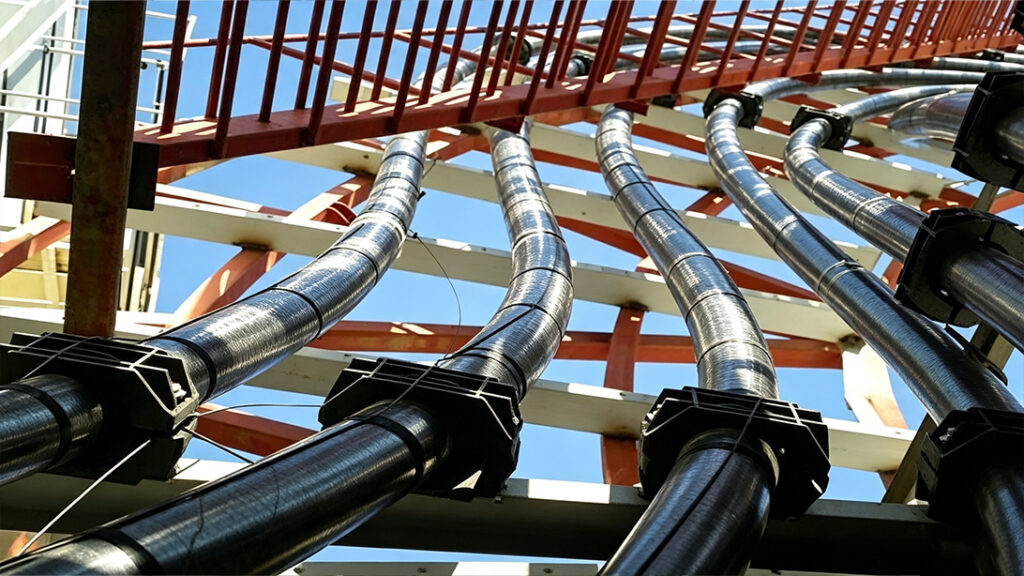
- Do not place cables directly on the ground; raise them above ground level;
- Install distribution boxes in elevated and dry locations;
- Provide drainage channels around electrical equipment.
Physical isolation is the simplest and most effective method of preventing water-related electrical accidents.
Grounding and Neutral Protection
All metal enclosures of electrical equipment must be reliably grounded. Grounding is not simply a matter of connecting a wire once and leaving it permanently.
Regular inspections are required to check:
- Whether grounding screws are loose;
- Whether grounding resistance values meet requirements.
When electrical leakage occurs, the grounding system directs the fault current safely into the ground, allowing the protection device to operate and disconnect the power supply.
Leakage Protection
All electrical equipment used in the following situations must be equipped with Residual Current Devices (RCDs):
- Hand-held electrical tools;
- Portable equipment;
- Electrical equipment used in humid environments.
A two-level protection system should be adopted:
- One protection device at the main switch;
- One protection device at the terminal equipment level.
Installing an RCD does not mean the system becomes maintenance-free. The test button should be pressed regularly to verify proper operation. Any device with slow or unreliable response should be replaced immediately.
Insulation Monitoring
In simple terms, insulation monitoring means regularly using a megohmmeter (insulation resistance tester) to measure insulation resistance.
A low insulation resistance value indicates that:
- The insulation may have absorbed moisture;
- The insulation may have aged or deteriorated.
In such cases, the equipment should be taken out of service for inspection or replacement as required.
III. Practical Electrical Safety Measures for Construction Sites During the Rainy Season
Electrical systems at construction sites are usually temporary. Cables are temporarily installed, equipment is frequently relocated, and distribution boxes may be moved from one location to another.
Under these conditions, electrical safety risks during the rainy season are much higher than those in permanent facilities.
3.1 Protection of Cable Lines
The most common electrical hazard at construction sites is cables being submerged in water.
Many construction sites have the habit of placing cables directly on the ground. Under normal conditions, there may be no obvious problem. However, once it rains, the ground becomes covered with water puddles, and the cables remain soaked in water.
After prolonged exposure to water, the insulation performance of cables deteriorates. Combined with damage caused by:
- Vehicle crushing;
- Personnel stepping on cables;
- Mechanical impact;
electrical leakage may eventually occur.
The following measures should be implemented:
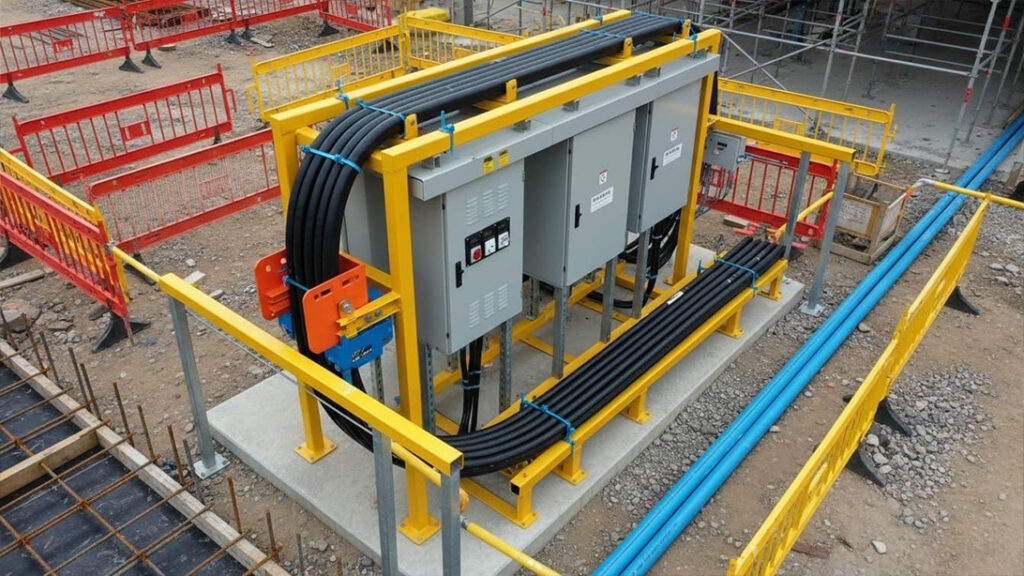
Elevate Cable Installation
Use cable supports to raise cables above ground level, preferably at least 20–30 cm above the ground.
The supports can be fabricated on-site and painted with highly visible red and white markings to improve visibility and prevent accidental crushing.
This requires little investment but effectively separates cables from accumulated water.
Do Not Allow Cables to Be Laid Directly on the Ground
Power cables must not be installed along the ground surface, and exposed conductors must never be used directly.
Temporary cable routes should either be:
- Installed overhead;
- Fixed along walls or other protected structures.
Waterproof Cable Joints
Cable joints are one of the weakest points in a temporary power system and must receive proper waterproof protection.
Without waterproof connectors or sealing measures, rainwater can enter the joint along the outer cable sheath, causing short circuits within a very short time.
Replace Damaged Cables Immediately
Cables with damaged insulation should not be temporarily repaired by simply wrapping them with electrical tape and continuing operation.
They should be replaced directly with new cables.
During inspections, special attention should be paid to easily overlooked areas, including:
- Corners;
- Cable bends;
- Areas near equipment connections;
- Places subject to mechanical damage.
Proper cable management and regular inspection are essential to maintaining electrical safety during the rainy season.
3.2 Protection of Distribution Boxes and Switch Boxes
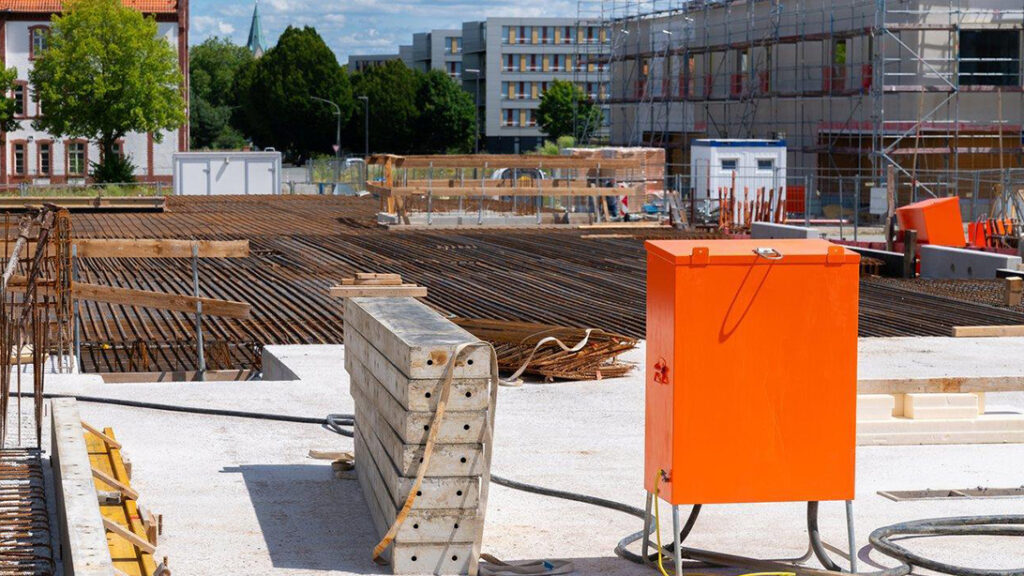
The distribution box is the central hub of construction site power systems, controlling all outgoing circuits.
If rainwater enters the distribution box, the protection functions of the entire electrical system may fail.
During actual operation, the following points should be considered:
Install Distribution Boxes Indoors Whenever Possible
Distribution boxes are preferably installed indoors.
If outdoor installation is unavoidable, a rainproof shelter must be provided. The shelter should protect the equipment not only from rain but also from accidental impact.
Ensure the Box Door Is Properly Sealed and Locked
The box door must close tightly and be lockable.
After work hours, all distribution boxes should be locked. Small gaps should not be left open, as rainwater can easily enter through them.
Provide Proper Drainage Around Distribution Boxes
Drainage channels should be installed around distribution boxes.
After rainfall stops, the boxes should be checked immediately to confirm whether any water has entered.
Ensure Proper Protective Grounding
All metal enclosures of distribution boxes must be connected to the protective grounding conductor (PE conductor).
This grounding connection is a critical safety measure, not just a formality.
3.3 Zisheng Electric Outdoor Waterproof and Dustproof Distribution Boxes
At many construction sites, distribution boxes do not have sufficient protection ratings. During rainy weather, temporarily covering them with plastic sheets is a common practice, but this is not a long-term solution.
Zisheng Electric provides outdoor waterproof and dustproof distribution boxes specifically designed for outdoor humid environments such as:
- Construction sites;
- Industrial plants;
- Outdoor electrical installations.
The enclosure is available in two material options:
- High-strength flame-retardant engineering plastic;
- 304/316L stainless steel.
The box door and enclosure are equipped with a high-elasticity sealing gasket. Cable entry and exit points use waterproof cable glands.
The protection rating can reach up to IP65, allowing the equipment to withstand:
- Continuous rainfall exposure;
- On-site high-pressure water cleaning.
The bottom of the enclosure adopts an elevated structure and can also be installed with mounting brackets. Even when water accumulates on the ground, the risk of flooding into the box is greatly reduced.
Internal Configuration
The distribution box can integrate:
- Power circuits;
- Lighting circuits;
- Molded case circuit breakers (MCCB);
- Residual current protection devices (RCD);
- Surge protection devices (SPD).
It can also meet the requirements of the three-level power distribution system commonly required on construction sites, with:
- Main switch protection;
- Branch circuit protection;
- Step-by-step protection coordination.
Main Technical Parameters of Zisheng Electric Outdoor Waterproof and Dustproof Distribution Bo
| Parameter | Specification |
|---|---|
| Rated operating voltage | AC 220V / 380V (DC 12V, 24V and other voltages can be customized) |
| Rated insulation voltage | 660V |
| Rated frequency | 50Hz / 60Hz |
| Main circuit rated current | 63A – 630A |
| Protection rating | IP65 – IP66 (dustproof, water spray and high-pressure water jet protection) |
| Corrosion protection grade | WF1 – WF2 (resistant to acid/alkali atmosphere and salt mist corrosion) |
| Enclosure material | High-strength flame-retardant engineering plastic (PC/ABS) or 304/316L stainless steel |
| Ambient temperature | -25°C to +60°C |
| Installation method | Wall-mounted, pole-mounted, or floor-mounted support type |
| Applicable standards | GB/T 14048 and related standards |
Note:
The enclosure size, number of circuits, internal component brands, and component models can all be customized according to project requirements.
3.4 Grounding and Lightning Protection
During the rainy season, lightning activity increases. Grounding and lightning protection systems must be treated as critical safety measures.
Before the rainy season begins:
- Inspect the entire site’s lightning protection and grounding system;
- Measure grounding resistance values.
During thunderstorms, do not measure the grounding resistance of transformer neutral points, as this operation is unsafe.
Grounding electrodes should be inspected for:
- Corrosion;
- Loose connections.
Required actions:
- Tighten loose connections;
- Replace damaged components.
Special attention should be paid to key areas, including:
- Safety valves;
- Vent outlets;
- Other exposed metal structures.
Lightning protection measures should be carefully checked in these locations.
3.5 Electrical Management and Emergency Response
Several strict rules should be followed for electrical management during rainy weather:
Power Shutdown During Severe Weather
During thunderstorms and strong winds, all unnecessary power supplies should be disconnected.
Only essential systems such as:
- Emergency lighting;
- Fire protection systems;
- Drainage and water removal equipment;
should remain energized.
Prepare Emergency Lighting
Emergency lighting should always be available to prevent panic and ensure safe evacuation during power failures.
Maintain Electrician Duty and Inspection Systems
Electricians should remain on duty and conduct regular inspections.
Shift handover records should clearly document:
- Whether cables have been damaged or crushed;
- Whether cable joints are secure;
- Whether protective grounding conductors are properly tightened.
Prohibit Unauthorized Electrical Connections
Non-electricians must not connect power cables or modify electrical systems without authorization.
This rule has been emphasized for many years, but it remains one of the most important electrical safety requirements.
IV. Practical Electrical Safety Measures for Industrial Plants During the Rainy Season
Unlike construction sites, industrial plants generally have fixed equipment and more organized layouts. However, factories usually contain a large number of electrical devices, operate continuously for long periods, and many workshops are naturally humid.
Therefore, electrical safety pressure in industrial plants during the rainy season should not be underestimated.
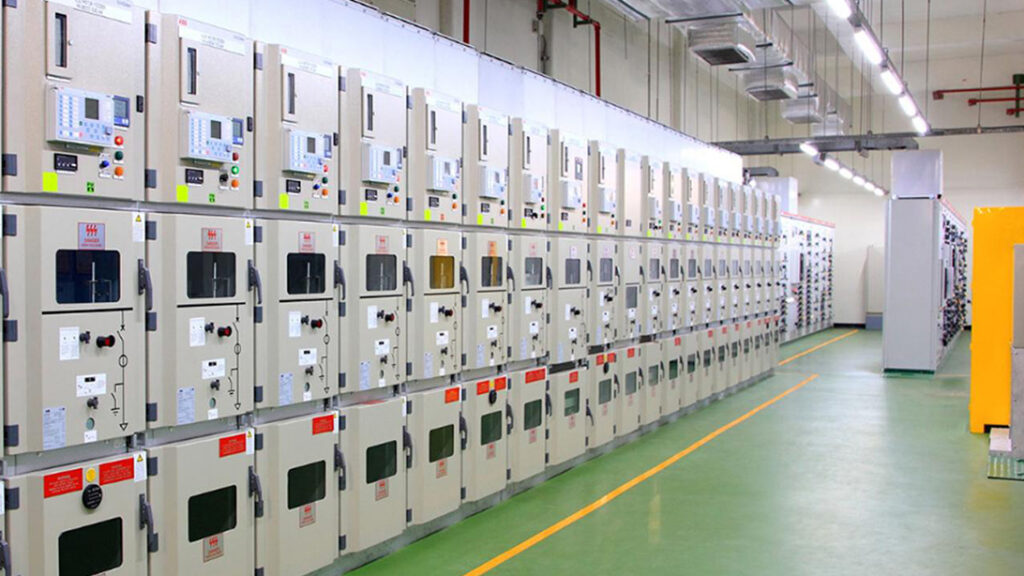
4.1 Protection of Power Distribution Rooms and Switchgear Rooms
If water enters the power distribution room, the entire factory may be forced to shut down.
Before the rainy season:
- Inspect the sealing conditions of roofs, walls, doors, and windows;
- Repair any leakage points immediately;
- Increase monitoring during periods of heavy rainfall.
For outdoor terminal boxes and distribution cabinets:
- Ensure cabinet doors are fully closed;
- Do not leave any gaps that allow rainwater to enter.
If water leakage is found in the distribution room:
- Report the issue immediately;
- If water has already reached energized equipment, first cover the equipment with waterproof plastic sheets before further handling.
At the same time:
- Seal openings and gaps to prevent rodents from entering;
- Small animals can damage insulation layers by biting cables, which may eventually cause short circuits.
4.2 Protection of Electrical Equipment in Humid Areas
Workshops such as:
- Painting workshops;
- Water treatment facilities;
are already humid under normal conditions, and conditions become worse during the rainy season.
Recommended measures:
Use Waterproof Electrical Accessories
Humid areas should use:
- Waterproof sockets;
- Waterproof switches.
Ordinary electrical accessories are not suitable.
Install Leakage Protection Devices
All electrical equipment in humid areas should be equipped with leakage protection devices.
Their sensitivity should be tested regularly to ensure reliable operation.
Remove Surface Moisture from Equipment
After equipment shutdown:
- Wipe off surface moisture;
- Prevent water vapor from remaining inside the equipment enclosure.
Conduct Regular Insulation Resistance Testing
Use insulation resistance testers regularly.
If insulation resistance values fail to meet requirements:
- Stop using the equipment;
- Do not take risks based on temporary assumptions.
4.3 Equipment Grounding and Leakage Protection
A comprehensive inspection should be carried out to verify grounding compliance, including checking for:
- Loose connections;
- Broken grounding conductors;
- Poor contact points.
For areas exposed to water:
- Confirm that leakage protection devices are installed;
- Verify that all protection devices function correctly.
Temperature monitoring should also be performed on key components, including:
- Transformers;
- Cable joints;
- Motors;
- Electrical contact points.
Abnormal temperature rise usually indicates potential faults.
4.4 Flood Prevention and Drainage
If the drainage system fails, all other protective measures may become ineffective.
Before the rainy season:
- Clean and inspect rainwater channels;
- Clear blocked drainage routes;
- Check wastewater drainage systems.
For low-lying areas prone to flooding:
- Install warning signs;
- Assign personnel for monitoring.
Wastewater treatment facilities should also receive proper inspection and maintenance to avoid failures during critical periods.
4.5 Emergency Plans and Drills
Accidents often happen suddenly. Having an emergency plan makes a significant difference.
Establish Emergency Plans for Large-Scale Power Failures During Thunderstorms
Do not wait until an accident occurs before deciding what actions should be taken.
Emergency procedures should include:
- Power outage response;
- Equipment protection measures;
- Personnel evacuation procedures.
Conduct Regular Emergency Drills
Employees should understand:
- What to do during a power failure;
- What actions are prohibited.
Prepare Flood Control Emergency Materials
Adequate supplies should be prepared, including:
- Drainage pumps;
- Sandbags;
- Waterproof sheets.
Implement 24-Hour Duty Systems
Personnel should remain on duty during critical weather periods.
Problems should be reported immediately, and in severe situations, evacuation should be organized decisively.
V. Daily Management and Long-Term Safety Mechanism
Rainy-season protection should not be treated as a temporary campaign. It should become a standardized management system.
5.1 The “Three Inspections” Mechanism
Establish a routine:
“Inspection Before Rain – Patrol During Rain – Reinspection After Rain”
Before Rain:
Check whether:
- Protective facilities are properly installed;
- Drainage systems are ready;
- Equipment sealing is effective.
During Rain:
Check:
- Equipment operating conditions;
- Abnormal sounds or overheating;
- Water accumulation around electrical facilities.
After Rain:
Check:
- Whether equipment has been damaged;
- Whether moisture has entered electrical systems.
Every rainfall is a practical test of electrical safety management.
5.2 Regular Testing System
Electrical equipment should undergo regular testing, including:
- Insulation resistance measurement;
- Leakage protection device sensitivity testing;
- Grounding resistance measurement.
All inspection and testing records should be properly archived for future reference.
5.3 Personnel Training
Requirements include:
- Electricians must hold valid qualifications before working;
- Ordinary employees should receive electrical safety training.
Basic safety knowledge should be repeatedly emphasized, including:
- Prohibition of unauthorized wiring;
- Never touching electrical equipment with wet hands;
- Maintaining safe distance from electrical facilities.
Emergency evacuation and response procedures should also be practiced.
A written emergency plan alone is not enough — personnel must know how to operate correctly.
5.4 Material Preparation
Before the rainy season, prepare sufficient emergency supplies, including:
- Waterproof plastic sheets;
- Cable supports;
- Waterproof sockets, switches, and junction boxes;
- Spare leakage protection devices and circuit breakers;
- Drainage pumps and sandbags;
- Emergency lighting equipment.
VI. Conclusion
Rainy-season electrical safety protection is not complicated in principle. The key objectives are:
- Prevent electrical leakage;
- Prevent short circuits;
- Prevent lightning damage.
However, implementation involves multiple areas, including:
- Cable protection;
- Distribution box protection;
- Grounding systems;
- Leakage protection;
- Flood prevention;
- Emergency response.
If any part of the system is neglected, problems may appear during rainy weather.
The methods used at construction sites and industrial plants are not exactly the same, but the basic logic is identical:
- Systematically identify risks;
- Implement protection measures one by one;
- Maintain regular inspections and testing.
When daily safety management is properly implemented, electrical systems can remain reliable even during the rainy season.
Zisheng Electric provides:
- Oil-immersed transformers;
- Dry-type transformers;
- Amorphous alloy transformers;
- Outdoor waterproof and dustproof distribution boxes.
Products are supplied according to international standards including IEC 60076 and GOST.
For different environmental conditions:
- Hot climates in the Middle East;
- Humid environments in South America;
- Dust and sand exposure in Africa;
- Extremely cold conditions in Russia;
Zisheng Electric provides corresponding technical solutions.
The company has accumulated experience in:
- Moisture resistance;
- Corrosion protection;
- High-temperature resistance;
- Sand and dust protection;
- Low-temperature operation solutions.
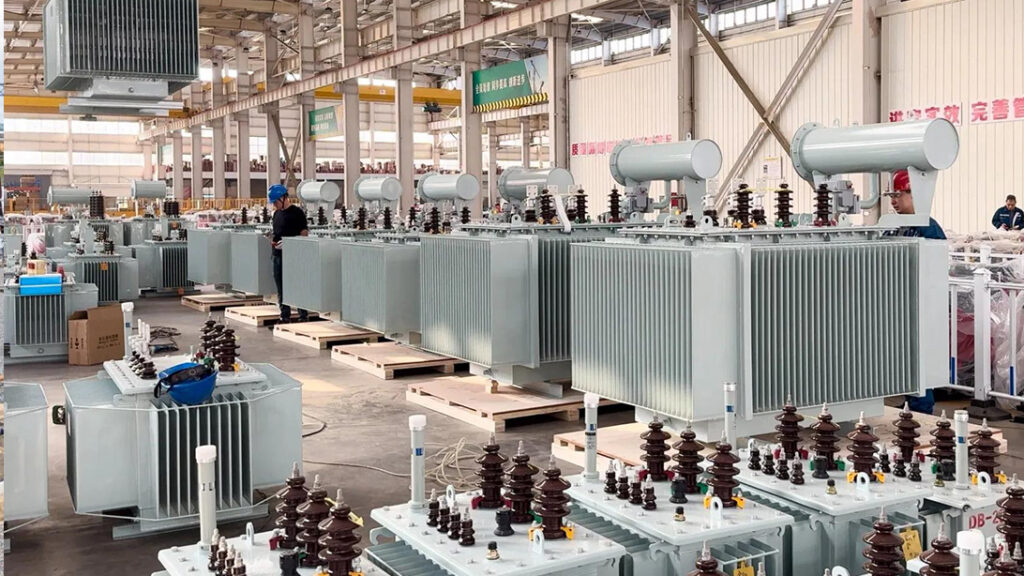
Zisheng Electric’s product portfolio covers oil-immersed transformers, dry-type transformers, amorphous alloy transformers, and outdoor waterproof and dustproof distribution boxes. Products can be customized and manufactured according to international standards such as IEC 60076 and GOST.
About ZISHENG ELECTRICAL
Zisheng are a professional 19+ years manufacturer in producing Oil-Immersed Transformers, Compact Substation, Pad Mounted Transformers, Pole Mounted Transformers and Dry Type Transformers. We own the certificates of ISO/CE/IEC 60076 and TUV Rheinland.
Transformers undergo rigorous FAT and type testing, support voltage/capacity customization. Welcome to consult for Catalog and Product. you can contact us at email [email protected].