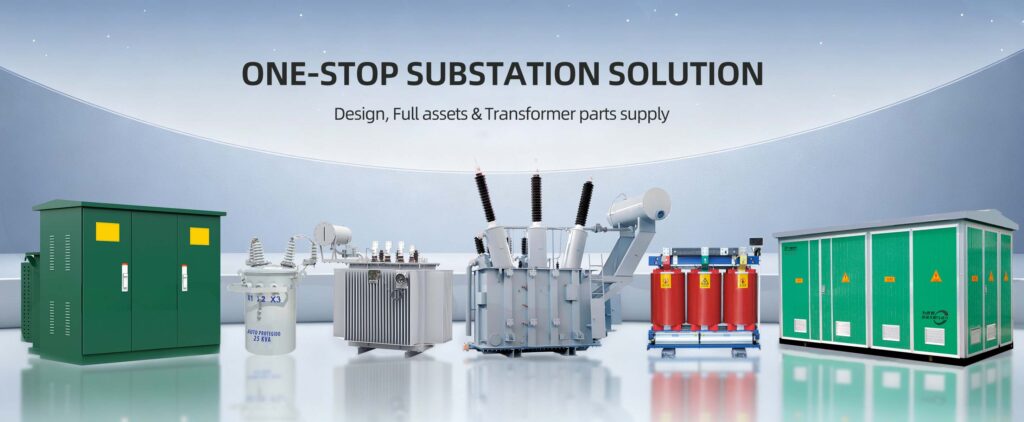
Moisture-Proof and Anti-Corrosion Power Distribution Solution for Coastal Industrial Areas in Guayaquil Under High Humidity and Salt Mist Conditions
— Customized Low-Voltage Distribution Equipment Case Study for a Coastal Industrial Project in South America
Guayaquil, the largest city in Ecuador, is located along the Pacific coast and serves as an important industrial, port, and manufacturing hub in the region. Due to its proximity to the ocean, the area is continuously exposed to challenging environmental conditions, including high humidity, high salt mist concentration, high temperatures, and heavy rainfall, creating strict requirements for the reliability and durability of industrial electrical equipment.
In the coastal industrial zones of Guayaquil, industries such as food processing, metal manufacturing, logistics warehousing, and other continuous production facilities typically operate on a 24-hour basis. Their power distribution equipment is exposed to humid environments, salt-laden air, and frequent temperature and humidity fluctuations for extended periods.
Under these harsh operating conditions, conventional standard electrical equipment often experiences issues such as:
- Cabinet corrosion caused by salt mist exposure
- Internal condensation and moisture accumulation
- Reduced insulation performance
- Failure of electrical components
- Increased maintenance frequency and operating costs
In severe cases, these failures can directly affect the continuity and stability of industrial production, resulting in unexpected downtime and economic losses.
Therefore, for coastal industrial projects in Guayaquil and similar regions, electrical distribution systems require customized protection solutions with enhanced moisture resistance, corrosion resistance, sealing performance, and environmental adaptability to ensure long-term safe and reliable operation.
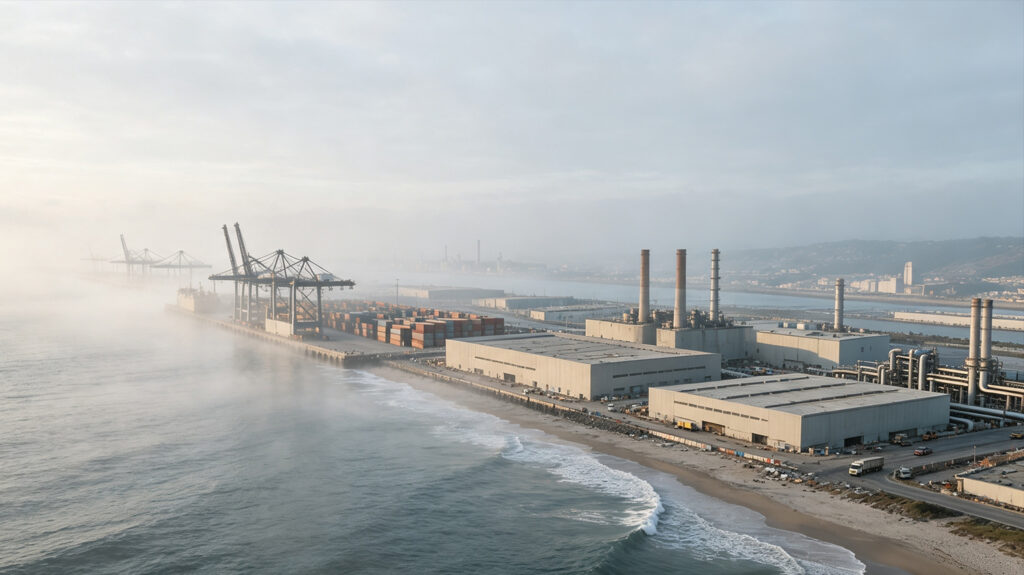
With the expansion of industrial parks and the increasing demand for upgrading existing power distribution systems, the customer required a more climate-adapted low-voltage distribution solution with enhanced moisture resistance, corrosion protection, and high reliability. The goal was to extend equipment service life, reduce long-term maintenance costs, and improve the overall stability of the power distribution system.
This article presents a case study of a power distribution system upgrade project for a large industrial processing area in Guayaquil, Ecuador. It introduces the customized electrical equipment optimization solutions designed for tropical coastal environments with high humidity and salt mist, and highlights the importance of environmental adaptability for electrical equipment used in overseas industrial projects.
I. Project Background and Operating Environment Challenges
The project was located in the coastal industrial area of Guayaquil, Ecuador, and focused on upgrading the power distribution system of a large local industrial park.
The industrial park mainly includes:
- Food processing production lines
- Textile manufacturing workshops
- Metal processing areas
- Auxiliary power systems
- Outdoor equipment power supply areas
Because the production systems operate continuously, the requirements for power supply reliability are extremely high. Any failure of electrical distribution equipment may result in production interruptions and significant economic losses.
The main equipment supplied for this project included:
- Low-voltage distribution cabinets
- Outdoor waterproof distribution boxes
- Industrial terminal distribution equipment
The equipment was mainly applied in:
- Factory power distribution systems
- Production equipment power supply
- Lighting systems
- Outdoor equipment control and power supply
However, the unique coastal climate conditions in Guayaquil presented severe challenges for conventional electrical equipment.
Project Environmental Condition Analysis
| Environmental Factor | Specific Conditions | Impact on Electrical Equipment |
|---|---|---|
| High humidity environment | Annual humidity up to approximately 88%, rainy season humidity often above 85%RH | Internal condensation, reduced insulation performance |
| Salt mist environment | Close to coastline with high salt concentration in the air | Accelerated metal corrosion and contact oxidation |
| High temperature environment | Annual average temperature 25-30℃, summer temperature above 35℃ | Accelerated aging of insulation materials |
| Heavy rainfall conditions | Frequent rainfall during rainy season | Increased risk of water ingress for outdoor equipment |
| Temperature variation | Day-night temperature difference around 8-12℃ | Frequent internal condensation formation |
During long-term operation, the original electrical equipment in the industrial area mainly experienced the following problems:
1. Cabinet Corrosion Problems
Conventional painted steel cabinets are vulnerable to coastal salt mist environments, resulting in:
- Aging of surface coating
- Metal corrosion
- Reduced mechanical strength of cabinet structures
Some equipment showed obvious corrosion after only several years of operation and required premature replacement.
2. Moisture-Induced Electrical Failures
Under high humidity conditions, condensation can easily form inside electrical cabinets, causing:
- Reduced insulation distance
- Moisture absorption and oxidation of terminals
- Malfunction of switching devices
- Risk of short circuits and unexpected tripping
For continuous production enterprises, even a single power interruption may result in significant economic losses.
3. Increasing Maintenance Costs
Due to insufficient environmental adaptability of previous equipment, the customer had to frequently perform:
- Cabinet repair
- Component replacement
- Anti-corrosion treatment
- Insulation inspection
Long-term maintenance expenses continued to increase, affecting production efficiency and operational stability.
Therefore, the core objective of this project was not simply to replace old equipment, but to establish a reliable power distribution system capable of long-term operation in coastal high-humidity industrial environments through environmental-adaptive design.
II. Customer Core Requirements
The project partner was a local industrial engineering contractor in Ecuador with extensive experience in industrial factory construction and power distribution system projects.
Based on the actual operating conditions in Guayaquil, the customer required the equipment to meet the following technical requirements:
| Requirement | Technical Requirements |
|---|---|
| Moisture resistance and condensation prevention | Effectively reduce humidity impact inside cabinets and prevent condensation |
| Salt mist corrosion resistance | Suitable for long-term operation in coastal environments |
| High protection level | Outdoor equipment required IP54 or above |
| High reliability operation | Support continuous industrial operation |
| Environmental adaptability | Suitable for high temperature, high humidity, and heavy rainfall conditions |
| Project compliance | Meet relevant IEC standards |
The customer particularly emphasized that:
Although conventional standard distribution equipment usually has a lower initial purchase cost, its long-term performance in Guayaquil’s coastal environment is limited.
Therefore, the project focused not only on equipment price, but also on:
- Full life-cycle reliability
- Long-term maintenance cost
- Equipment service life
- Operational stability
Finally, the project adopted a customized moisture-proof and anti-corrosion low-voltage distribution equipment solution specifically optimized for coastal industrial environments.
III. Customized Moisture-Proof and Anti-Corrosion Solution for Guayaquil Coastal Environment
Considering the long-term exposure to high humidity, high salt mist, high temperature, and heavy rainfall in the Guayaquil industrial area, the project team did not select conventional standard distribution equipment.
Instead, targeted improvements were carried out in multiple aspects, including:
- Material selection
- Structural design
- Protection level
- Electrical configuration
- Manufacturing process
- Factory testing
The overall design objectives were:
- Reduce the risk of moisture entering the equipment
- Prevent salt mist-induced metal corrosion
- Improve insulation reliability
- Extend equipment service life
- Reduce long-term maintenance costs
Through these improvements, a customized moisture-proof and anti-corrosion low-voltage power distribution solution suitable for tropical coastal industrial regions was developed.
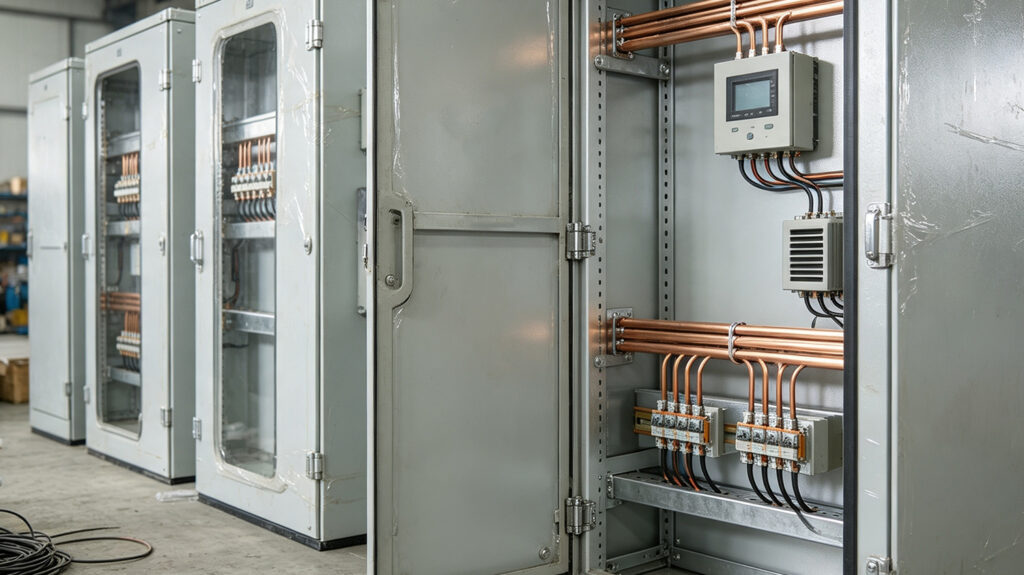
1. Upgrade of Anti-Corrosion Material System to Improve Salt Mist Resistance
In coastal industrial environments, airborne salt particles can enter and accumulate on equipment surfaces together with moisture. Over long periods of exposure, this can accelerate metal corrosion and reduce equipment reliability.
Therefore, the project first optimized the cabinet materials and protection treatment of metal components to enhance overall corrosion resistance.
(1) Enhanced Anti-Corrosion Treatment for Cabinet Structure
The equipment cabinet adopts:
- Thickened galvanized steel sheets
- Multi-stage surface pretreatment processes
- Electrostatic powder coating protection layer
During manufacturing, the surface treatment process is carried out in the following sequence:
- Degreasing and surface cleaning treatment
- Phosphating and anti-rust treatment
- Anti-corrosion primer treatment
- Electrostatic powder coating protection
The final coating thickness is controlled at:
60-80μm
Compared with conventional painting processes, this treatment provides:
- Stronger coating adhesion
- Better moisture resistance
- Higher salt mist corrosion resistance
- More stable outdoor operating performance
This effectively reduces the risk of long-term salt mist corrosion problems, including:
- Coating peeling
- Surface rusting
- Cabinet corrosion and perforation
(2) Enhanced Anti-Oxidation Protection for Conductive Metal Components
High humidity environments not only affect the external cabinet structure but also have a significant impact on internal electrical connection components.
To address this issue, the project applied corrosion protection measures to:
- Copper busbars
- Wiring terminals
- Electrical connectors
- Fasteners
The main optimization measures include:
- Tin-plated copper busbars
- Corrosion-resistant fasteners
- Additional anti-oxidation protection at critical connection points
Compared with bare copper conductors, tin-plated copper busbars provide:
- Stronger oxidation resistance
- More stable contact resistance
- More reliable long-term current-carrying performance
Especially in high-humidity and salt mist environments, this solution effectively reduces electrical failures caused by oxidation, including:
- Increased contact resistance
- Local overheating
- Electrical connection failure
2. Optimized Sealing Structure to Improve Equipment Protection Level
For coastal industrial projects, moisture penetration into electrical equipment is one of the major causes of operational failures.
Therefore, this project focused on optimizing the cabinet sealing structure to improve environmental protection performance.
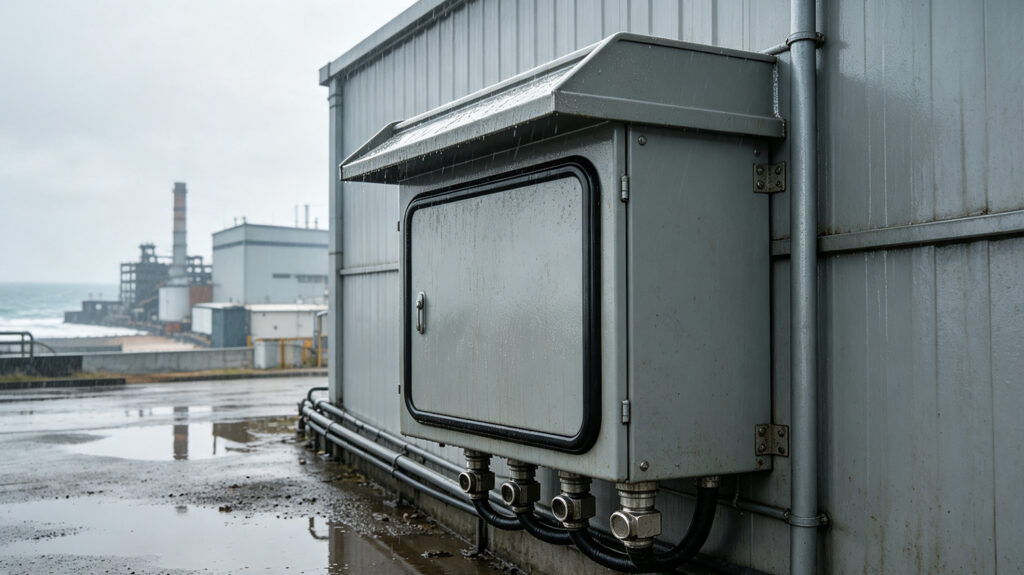
The overall protection level of the equipment reaches:
IP54
For specific critical outdoor installation areas, the protection level can be upgraded according to application requirements to:
IP65
This meets the requirements for dust protection, rain protection, and long-term operation in humid environments.
Main Sealing Structure Optimization Measures
| Component | Optimization Measures | Function |
|---|---|---|
| Cabinet door structure | Integrated waterproof sealing gasket | Reduces moisture penetration |
| Door frame design | Reinforced folded-edge structure | Improves overall sealing performance |
| Cable entry points | Waterproof cable glands | Prevents moisture entering through cables |
| Top cabinet structure | Double-layer rainproof canopy design | Prevents direct rainwater intrusion |
| Locks and hinges | Corrosion-resistant stainless steel components | Improves long-term durability |
For outdoor distribution boxes, additional protection designs include:
- Top drainage structure
- Rainproof enclosure design
- Bottom waterproof cable entry system
Even under the heavy rainfall conditions during the rainy season in Guayaquil, these designs can effectively reduce the risk of water ingress and ensure stable equipment operation.
3. Intelligent Moisture Control System to Solve Condensation Problems
In high-humidity regions, simply improving the sealing level cannot completely eliminate moisture-related issues.
The reason is that:
Even without external water entering the equipment, condensation may still occur inside the cabinet due to temperature fluctuations and moisture contained in the internal air.
For example:
During nighttime temperature drops:
Cabinet internal air cools → moisture condenses → water droplets form → insulation performance decreases
Over time, repeated condensation cycles may lead to:
- Reduced insulation reliability
- Terminal oxidation
- Increased risk of short circuits
- Accelerated aging of electrical components
Therefore, according to the actual environmental characteristics of Guayaquil, the project introduced an integrated solution combining:
Intelligent dehumidification system + Anti-condensation heating system
(1) Intelligent Dehumidification System
The equipment is equipped with an intelligent humidity monitoring module to continuously monitor the internal cabinet environment, including:
- Temperature
- Humidity
- Condensation risk level
When the humidity exceeds the preset value:
The dehumidification system automatically starts operation.
Main functions include:
- Reducing internal cabinet air humidity
- Preventing moisture accumulation
- Maintaining insulation performance and electrical clearance reliability
Through active humidity control, the system effectively reduces the risk of electrical failures caused by long-term exposure to high-humidity environments.
(2) Anti-Condensation Heating System
Considering the day-night temperature variations in Guayaquil, the equipment is equipped with:
Cabinet anti-condensation heaters
Operating logic:
Nighttime temperature decreases → Heater automatically starts → Cabinet temperature increases slightly → Dew point is avoided → Moisture condensation is prevented
This solution is especially suitable for:
- Outdoor distribution boxes
- Terminal control cabinets
- High-humidity industrial areas
By maintaining the internal cabinet temperature slightly above the dew point, the system prevents water vapor from condensing on electrical components and insulation surfaces.
(3) Optimized Ventilation and Heat Dissipation Design
Although electrical equipment requires strong moisture protection, effective heat dissipation is also essential during continuous operation.
Therefore, the project adopts:
- Optimized internal ventilation channels
- Protective ventilation openings
- Dust-proof filter structures
The design achieves a balance between:
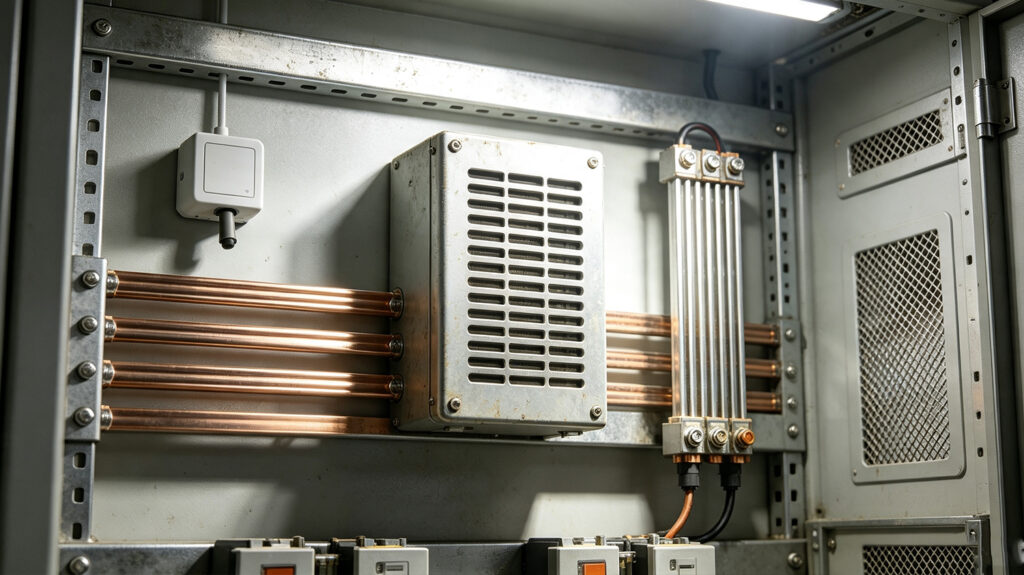
Preventing moisture accumulation while ensuring that equipment temperature rise remains within allowable limits.
This ensures stable operation under the combined conditions of:
- High humidity
- High temperature
- Continuous industrial operation
4. Manufacturing and Testing Verification According to International Standards
To ensure that the equipment can operate reliably in the coastal environment of Guayaquil for the long term, the entire production process strictly follows relevant international standards and testing requirements.
The project adopts a complete quality control system covering:
- Material inspection
- Manufacturing process control
- Environmental protection performance testing
- Electrical safety verification
- Final factory acceptance testing
All equipment is manufactured and tested according to applicable international standards to ensure:
- High reliability
- Long service life
- Stable operation in tropical coastal environments
The key standards and verification items include:
- IEC 61439 low-voltage switchgear and controlgear assembly standards
- Protection rating verification (IP54/IP65)
- Humidity resistance testing
- Salt mist corrosion resistance testing
- Insulation performance testing
Through strict testing and verification, the equipment is proven capable of meeting the demanding requirements of high-humidity, high-salt coastal industrial applications.
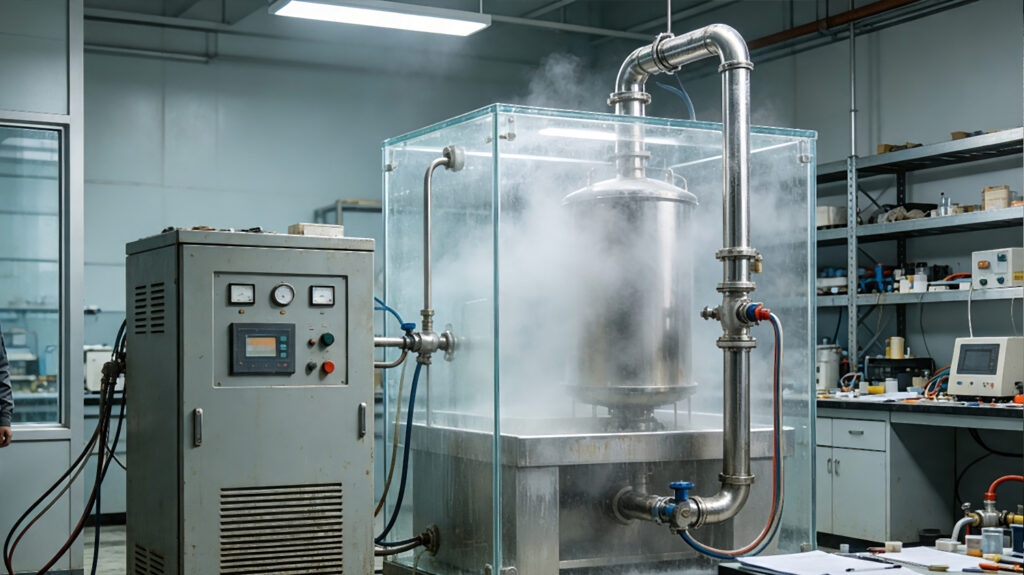
Main Reference Standard:
IEC 61439 Low-Voltage Switchgear and Controlgear Assembly Standard
In addition to standard requirements, additional environmental tests were introduced according to the local coastal climate conditions.
Main Testing Items
| Testing Item | Testing Purpose |
|---|---|
| High-humidity simulation test | Verify equipment adaptability under long-term humid environmental conditions |
| Salt mist corrosion test | Evaluate corrosion resistance of cabinet structures and metal components |
| Protection level test | Confirm IP54/IP65 protection performance |
| Insulation performance test | Ensure electrical safety under high-humidity conditions |
| Temperature rise test | Verify long-term operating reliability |
After manufacturing completion, each unit undergoes:
- Visual inspection
- Electrical performance testing
- Insulation resistance testing
- Protection structure inspection
- Factory quality acceptance
At the same time, the project provides complete documentation, including:
- Factory test reports
- Technical documents
- Product certification materials
These documents ensure compliance with the acceptance requirements of overseas industrial projects.
5. Complete Delivery Service for Overseas Industrial Projects
Since the project is located in South America, equipment delivery involves not only product performance requirements but also international transportation, on-site installation, and technical support.
Therefore, the project adopts a complete overseas delivery process:
| Project Stage | Service Content |
|---|---|
| Technical confirmation stage | Determine equipment design according to local climate conditions and load requirements |
| Production stage | Dedicated project management for manufacturing progress and quality control |
| Packaging and transportation stage | Moisture-proof, shock-resistant, and anti-corrosion packaging suitable for sea transportation |
| Installation stage | Provide installation guidance and technical support |
| Operation stage | Provide remote technical service and troubleshooting support |
For long-distance ocean transportation, the equipment adopts:
- Moisture-proof packaging film
- Desiccant protection
- Reinforced wooden crate fixation
These measures effectively reduce the risk of equipment damage caused by:
- Marine humidity
- Salt mist exposure
- Temperature fluctuations
during international shipping.
IV. Project Implementation Results and Operation Verification
After completing:
- Solution design
- Equipment manufacturing
- Factory testing
- On-site installation and commissioning
the customized moisture-resistant and corrosion-resistant low-voltage distribution cabinets and outdoor distribution boxes were successfully delivered and installed in the Guayaquil industrial zone.
The equipment has been put into actual operation, demonstrating stable performance under the local coastal environmental conditions, including:
- High humidity
- High salt mist concentration
- High temperature
- Frequent rainfall
The project successfully improved the reliability of the industrial power distribution system and solved the long-term problems previously caused by environmental corrosion and moisture exposure.
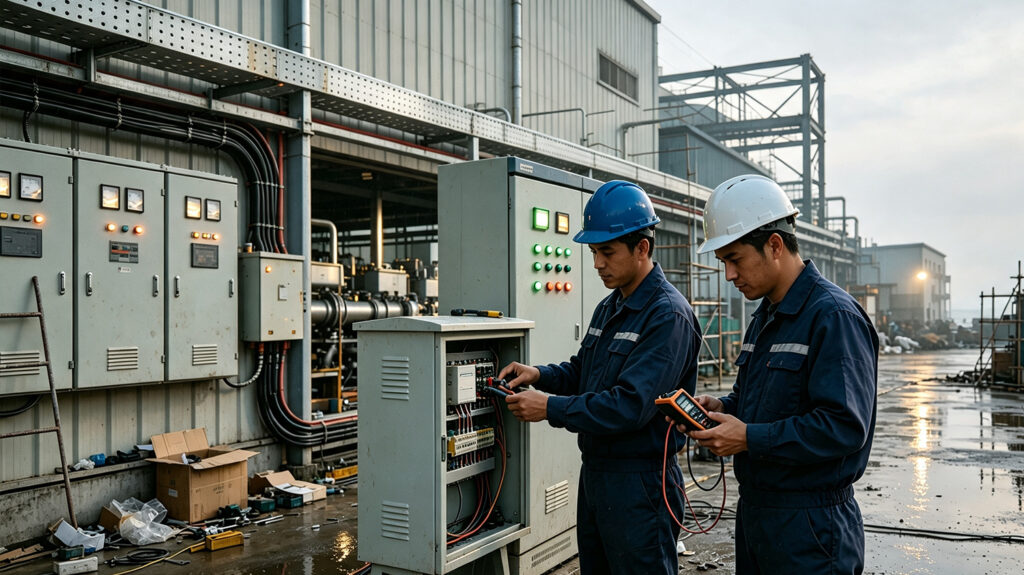
Project Operation Results
After commissioning, the equipment has maintained stable operating conditions and successfully adapted to the long-term environmental challenges in Guayaquil, including:
- High humidity conditions
- Marine salt mist exposure
- High-temperature weather
- Continuous rainfall environments
The customized solution effectively eliminated the problems commonly found in the original equipment, including:
- Internal cabinet condensation
- Reduced insulation performance
- Metal corrosion
- Oxidation of electrical components
- Frequent equipment failures
Compared with conventional standard electrical equipment, this project upgraded the system from simply “meeting basic operational requirements” to achieving “long-term reliable operation in demanding industrial environments.”
Project Performance Comparison
After a period of operational monitoring, the improvement results are shown below:
| Operating Indicator | Original Equipment | Upgraded Equipment |
|---|---|---|
| Equipment failure frequency | Frequent moisture and corrosion-related failures | No major failures observed |
| Internal condensation | Significant condensation during rainy seasons | No condensation detected |
| Cabinet corrosion | Visible surface corrosion | Cabinet maintained in good condition |
| Insulation performance | Gradual decline over operation time | Remained stable |
| Maintenance frequency | Regular repairs and component replacement required | Significantly reduced |
| Production impact | Risk of production interruption | Supports continuous operation |
The project results demonstrate that:
For coastal industrial environments with high humidity and salt mist, simply increasing equipment specifications cannot completely solve environmental problems.
A complete environmental adaptation solution must combine:
Corrosion-resistant materials + Sealing structure optimization + Intelligent moisture control + Standardized testing
to achieve long-term reliability.
Customer Feedback
After project completion, the customer gave positive feedback regarding equipment reliability and overall project service:
“The coastal environment of Guayaquil has long been characterized by high humidity and strong salt mist. Previously, standard distribution equipment suffered from corrosion problems and frequent maintenance requirements. After adopting the customized moisture-resistant and corrosion-resistant solution, the equipment has operated stably and maintenance work has been significantly reduced. The entire project, from technical communication and manufacturing to delivery support, fully met the requirements of an industrial project.”
Based on the successful cooperation, both parties established a long-term partnership and will continue cooperation in:
- Industrial park expansion projects
- Upgrading of aging distribution systems
- New factory power distribution projects
V. Coastal Industrial Electrical Equipment Demand Insights from the Guayaquil Project
The Guayaquil project is not an isolated case.
With global industrial development, a large number of industrial facilities are being built in coastal regions, including:
- Port industrial zones
- Petrochemical production bases
- Manufacturing parks
- Food processing facilities
- Renewable energy industrial parks
These areas commonly face similar environmental challenges:
High temperature + High humidity + High salt mist + High corrosion risk
For electrical equipment suppliers, future competition in overseas industrial projects will no longer focus only on product price, but increasingly on:
- Environmental adaptability
- Product reliability
- Customization capability
- Project delivery experience
Global High-Humidity and Salt-Mist Industrial Markets
| Region | Typical Countries/Areas | Main Environmental Characteristics |
|---|---|---|
| Southeast Asian coastal regions | Indonesia, Malaysia, Philippines, Vietnam | High temperature, high humidity, heavy rainfall |
| South American coastal regions | Ecuador, Brazil, Colombia, Chile | Salt mist, humidity, industrial corrosion |
| Caribbean coastal regions | Gulf of Mexico, Caribbean countries | High humidity, high salt mist, hurricane conditions |
| West African coastal regions | Nigeria, Ghana, etc. | High temperature, high humidity, marine corrosion |
| Middle East coastal industrial areas | Saudi Arabia, UAE, Qatar | Salt mist, high temperature, dust exposure |
Although climate conditions vary between regions, industrial electrical equipment requirements are highly consistent:
- High reliability
- Enhanced corrosion resistance
- High protection level
- Reduced maintenance costs
VI. Key Selection Recommendations for Coastal Industrial Distribution Equipment
For industrial applications similar to Guayaquil, when selecting:
- Low-voltage distribution cabinets
- Outdoor distribution boxes
- Industrial control cabinets
the following parameters should be carefully considered:
| Key Indicator | Recommended Requirements |
|---|---|
| Cabinet material | Thick galvanized steel or stainless steel |
| Surface treatment | Anti-corrosion pretreatment + electrostatic powder coating |
| Protection rating | Indoor: IP54; Outdoor: IP54/IP65 |
| Internal metal components | Tin-plated copper busbars, anti-oxidation treatment |
| Moisture protection | Heaters and intelligent dehumidification modules |
| Sealing design | Waterproof door seals and cable glands |
| Applicable standards | IEC 61439 and other international standards |
1. High-Humidity Coastal Regions
Main Focus:
- Moisture protection
- Condensation prevention
- Salt mist corrosion resistance
Recommended Solution:
IP54/IP65 protection + Intelligent dehumidification + Anti-corrosion coating
Suitable for:
- Southeast Asia
- South American coastal areas
- Port industrial zones
2. Hot and Dry Regions
Examples:
- Saudi Arabia
- UAE
- Middle East industrial areas
Main Focus:
- Heat dissipation
- Dust protection
- UV resistance
Recommended Solution:
- High-temperature design
- Enhanced ventilation
- Higher protection rating
3. Chemical and Corrosive Industrial Environments
Main Focus:
- Chemical corrosion resistance
- Gas erosion protection
- Long service life operation
Recommended Solution:
- Stainless steel cabinet structures
- Special anti-corrosion coatings
- Higher-grade sealing systems
Conclusion: Future Trends of Overseas Industrial Distribution Equipment from the Guayaquil Project
The Guayaquil coastal industrial project demonstrates that electrical equipment selection in overseas industrial applications is gradually shifting from traditional “meeting electrical parameters” toward:
Environment-adaptive engineering design
For special climate regions, high-quality distribution equipment must not only satisfy:
- Rated voltage
- Rated current
- Protection level
but also consider:
- Local climate conditions
- Actual operating environment
- Long-term maintenance costs
- Full life-cycle reliability
In the future, with the continuous expansion of global industrial parks, overseas engineering projects, and manufacturing upgrades, electrical equipment featuring:
Moisture resistance + Corrosion resistance + High reliability + Customization capability
will become a key competitive advantage in international markets.
With years of experience in overseas electrical projects, we provide global customers with integrated distribution solutions covering:
Environmental assessment → Solution design → Equipment manufacturing → International transportation → Technical support
helping customers solve power reliability challenges in complex operating environments worldwide.
About ZISHENG ELECTRICAL
Zisheng are a professional 19+ years manufacturer in producing Oil-Immersed Transformers, Compact Substation, Pad Mounted Transformers, Pole Mounted Transformers and Dry Type Transformers. We own the certificates of ISO/CE/IEC 60076 and TUV Rheinland.
Transformers undergo rigorous FAT and type testing, support voltage/capacity customization. Welcome to consult for Catalog and Product. you can contact us at email [email protected].