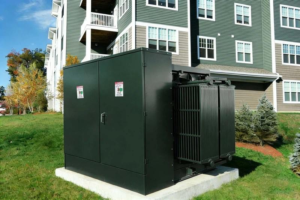
How Can Transformer Efficiency Be Improved to Reduce Energy Losses and Operational Costs?
High energy losses in transformers increase costs and reduce system reliability. Without optimization, inefficiencies worsen over time. Implementing advanced materials, smart monitoring, and proper design significantly improves transformer efficiency.
Improving transformer efficiency is essential for reducing energy losses and lowering operational costs. Core losses and copper losses are the primary factors affecting transformer efficiency. By adopting high-quality materials, optimized design, and smart monitoring systems, operators can enhance performance, extend equipment lifespan, and support sustainable power systems while minimizing environmental impact.
Understanding how efficiency improvements impact performance encourages deeper evaluation of transformer design, materials, and operational strategies.
Understanding Transformer Efficiency and Losses
Transformer efficiency refers to the ratio of output power to input power, indicating how effectively electrical energy is transferred. Improving transformer efficiency is essential for reducing energy losses and lowering operational costs, especially in large-scale power distribution systems.
There are two primary types of losses: core losses and copper losses. Core losses, also known as no-load losses, occur due to hysteresis and eddy currents in the transformer core. These losses remain constant regardless of load conditions. Copper losses, or load losses, are caused by the resistance of the windings and increase with load current.
Optimized transformer design helps minimize no-load and load losses by balancing these factors. Understanding how these losses occur allows engineers to identify inefficiencies and implement targeted improvements. Energy-efficient transformers reduce carbon emissions and support sustainable power systems, making efficiency optimization a critical priority in modern energy infrastructure.
Key Factors Affecting Transformer Efficiency
Several factors influence transformer efficiency, including material quality, load conditions, temperature, and design configuration. Core losses and copper losses are the primary factors affecting transformer efficiency, but their impact is shaped by additional operational variables.
Material selection plays a crucial role. Using high-quality silicon steel and copper windings can significantly enhance transformer performance by reducing resistance and magnetic losses. Load conditions are equally important, as transformers operate most efficiently near their rated capacity. Proper load management ensures that transformers operate within their optimal efficiency range.
Temperature also affects efficiency. Excessive heat increases resistance in windings, leading to higher copper losses. Advanced cooling systems contribute to improved efficiency by maintaining stable operating temperatures. Additionally, poor maintenance or aging components can degrade performance over time.
By addressing these factors holistically, operators can achieve consistent efficiency improvements and ensure reliable transformer operation.
Reducing Core and Copper Losses
Reducing both core losses and copper losses is essential for improving overall transformer efficiency. Core losses can be minimized by using advanced core materials and improved manufacturing techniques. High-grade silicon steel with low hysteresis loss significantly reduces energy dissipation during magnetization cycles.
Copper losses can be reduced by optimizing winding design and using high-conductivity copper materials. Increasing conductor cross-sectional area lowers resistance, thereby reducing heat generation. Using high-quality silicon steel and copper windings can significantly enhance transformer performance and ensure stable operation.
Optimized transformer design helps minimize no-load and load losses by carefully balancing core size, winding configuration, and insulation systems. Additionally, maintaining proper load levels prevents excessive current flow, which directly impacts copper losses.
Regular maintenance and monitoring help detect inefficiencies and prevent performance degradation. Cleaning, tightening connections, and checking insulation conditions all contribute to reducing unnecessary losses and maintaining high efficiency levels over time.
Advanced Materials and Design Optimization
The adoption of advanced materials and innovative design techniques plays a vital role in improving transformer efficiency. Modern transformers increasingly utilize amorphous metal cores, which offer significantly lower core losses compared to traditional silicon steel cores.
Using high-quality silicon steel and copper windings can significantly enhance transformer performance, but further improvements can be achieved through precision engineering. Optimized transformer design helps minimize no-load and load losses by improving magnetic flux distribution and reducing leakage.
Advanced cooling systems contribute to improved efficiency by maintaining stable operating temperatures. Technologies such as forced air cooling, oil circulation, and heat exchangers help dissipate heat effectively, preventing thermal stress and efficiency loss.
Compact and modular designs also contribute to efficiency improvements by reducing material waste and improving installation flexibility. Upgrading to modern transformer technologies can significantly improve overall system efficiency, making them a preferred choice for new infrastructure and retrofit projects.
Operational Strategies for Efficiency Improvement
Operational practices have a direct impact on transformer efficiency. Even the most advanced transformer design requires proper management to achieve optimal performance. Proper load management ensures that transformers operate within their optimal efficiency range, avoiding underloading or overloading conditions.
Load balancing across multiple transformers helps distribute demand evenly, reducing stress on individual units and minimizing losses. Scheduled maintenance is another critical factor. Regular maintenance and monitoring help detect inefficiencies and prevent performance degradation, ensuring long-term reliability.
Environmental conditions should also be controlled whenever possible. Maintaining adequate ventilation and avoiding excessive ambient temperatures can significantly improve efficiency. Operators should also monitor voltage levels and harmonics, as fluctuations can increase losses and reduce performance.
By implementing these operational strategies, organizations can maximize efficiency without requiring major equipment upgrades, achieving cost-effective improvements in energy performance.
Smart Monitoring and Energy Management Solutions
The integration of smart monitoring systems has transformed how transformer efficiency is managed. Smart monitoring systems enable real-time performance analysis and energy optimization, allowing operators to identify inefficiencies instantly.
These systems collect data on load, temperature, voltage, and losses, providing actionable insights for performance improvement. Advanced analytics can predict potential failures and recommend corrective actions before issues escalate. This proactive approach reduces downtime and maintenance costs.
Energy management platforms further enhance efficiency by optimizing power distribution across the network. Energy-efficient transformers reduce carbon emissions and support sustainable power systems, aligning with global energy efficiency goals.
Upgrading to modern transformer technologies combined with intelligent monitoring solutions ensures continuous performance improvement. This combination allows operators to maintain optimal efficiency levels while adapting to changing energy demands and operational conditions.
Conclusion
Improving transformer efficiency requires advanced materials, optimized design, and smart monitoring to reduce losses, lower costs, and support sustainable energy systems.
About ZISHENG ELECTRICAL
Zisheng are a professional 19+ years manufacturer in producing Oil-Immersed Transformers, Compact Substation, Pad Mounted Transformers, Pole Mounted Transformers and Dry Type Transformers. We own the certificates of ISO/CE/IEC 60076 and TUV Rheinland.
Transformers undergo rigorous FAT and type testing, support voltage/capacity customization. Welcome to consult for Catalog and Product. you can contact us at email [email protected].